Lake George Amazonite Hunt Cheat Sheet: US 24 Corridor Tips
Heading to Lake George to hunt amazonite this weekend? This is the short, practical version — no deep geology lesson, no history. Just what you need to know to stay legal, find ground, and bring home something blue-green. Read this before you load the truck.
We’re members of the Lake George Gem and Mineral Club and highly recommend joining. Dues are about $25/year, and membership is the single best way to get on productive amazonite ground in the Crystal Peak district. More on that below.
For the full geology, access, and claim breakdown, read our Crystal Peak field trip guide and the Lake George amazonite geology post.
The Area: US 24 / Lake George / Florissant
The corridor runs along US 24 from Florissant south through Lake George and into the Tarryall country. You’re looking for Pikes Peak granite pegmatites — the same 1.08-billion-year-old batholith that produces amazonite, smoky quartz, and topaz across Park and Teller counties.
Reading the Ground: A Newbie’s Geology Guide
If this is your first time hunting amazonite, here’s how to recognize the right ground. You don’t need a geology degree — you just need to know what the host rock looks like and what tells you a pocket might be nearby.
Pikes Peak granite — the host rock
Everything you’re looking for sits inside Pikes Peak granite, a 1.08-billion-year-old rock that covers 1,200 square miles of the Front Range. It’s a coarse-grained pink to brick-red granite. When you see it in the field, it looks like this:
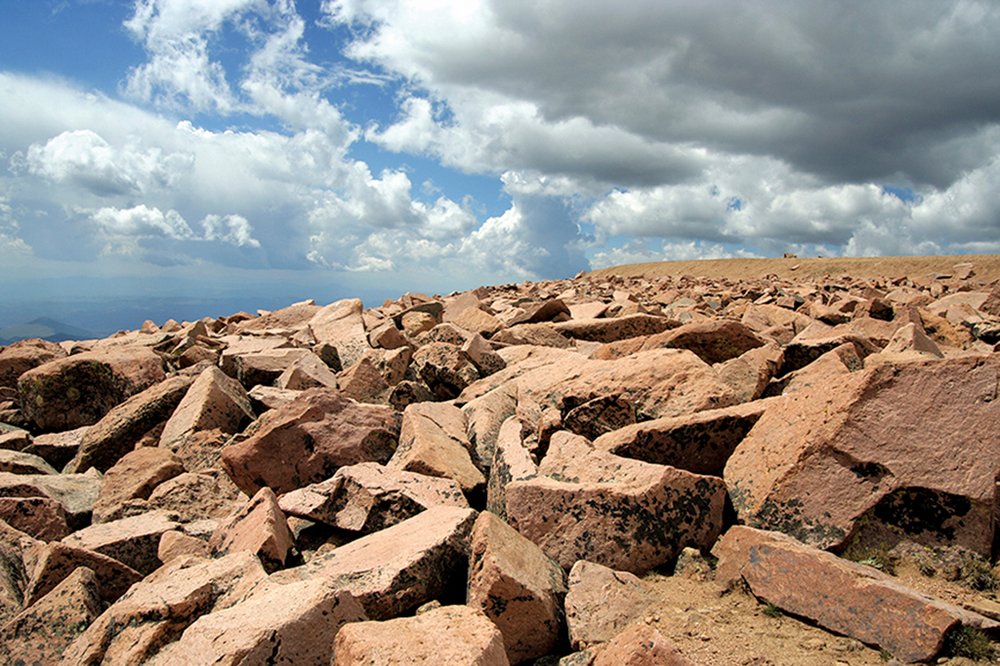
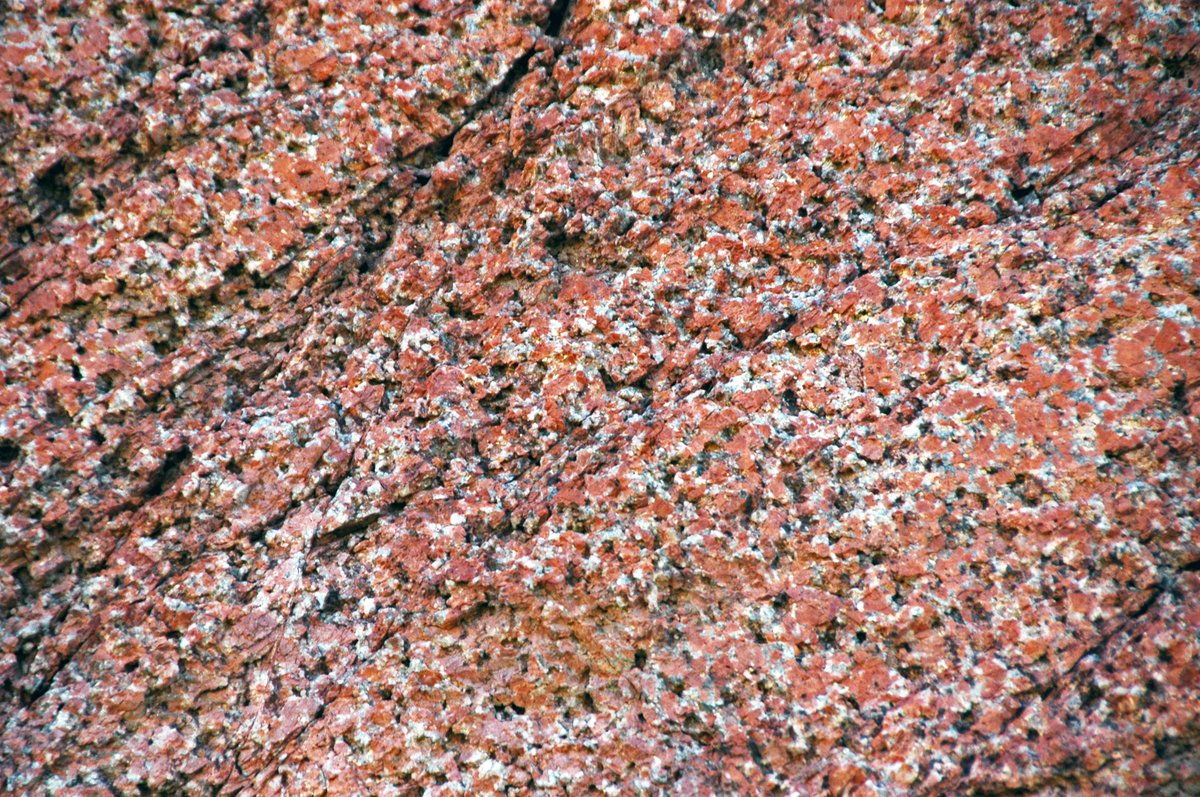
Pegmatite — where the crystals live
Pegmatites are coarse, late-stage zones within the granite where the magma concentrated rare elements (fluorine, lithium, beryllium) and water. These zones formed pockets (miarolitic cavities) where crystals grew in open spaces. The pegmatite zones are what you’re hunting for — the rest of the granite is just rock.
When you see pegmatite in the field, it looks noticeably coarser than the surrounding granite. The crystals are bigger, sometimes enormous — feldspar crystals the size of your fist, quartz crystals as thick as your arm. Here’s what it looks like when a pegmatite zone is exposed:
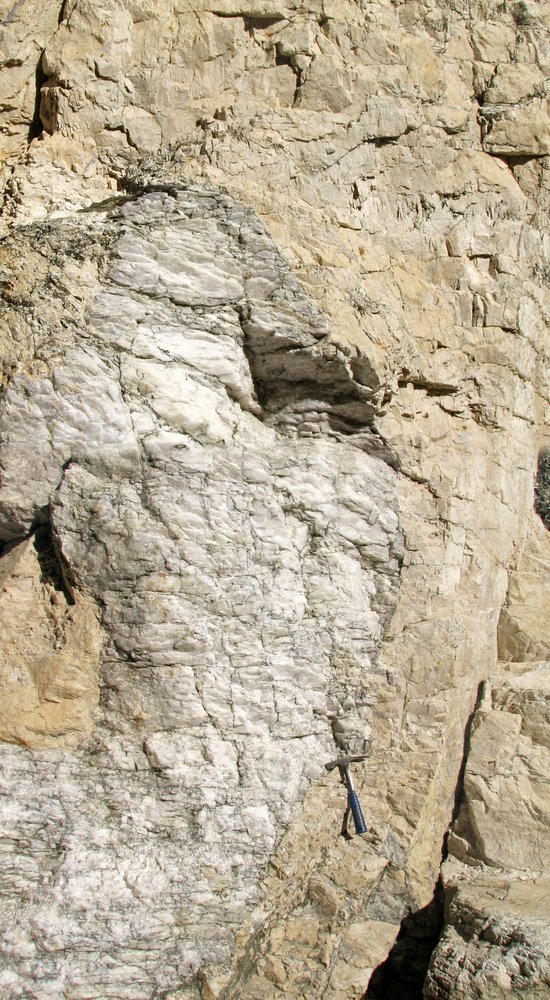
Grus — where the loose crystals sit
As pegmatite pockets weather out at the surface, the surrounding granite decomposes into grus — coarse, sandy, granular material that looks like decomposed granite gravel. This is the stuff you screen. Loose amazonite chips, smoky quartz fragments, and occasional topaz crystals sit in the grus downslope from where the pocket used to be.
Around Lake George, you’re not climbing peaks. The collecting areas are relatively level ground off US 24 — rolling forest terrain with low granite outcrops, roadcuts, and open patches of grus. The pegmatite zones weather out at the surface, leaving crystals in the loose gravel and soil. You walk, you scan, you screen.
When you arrive at a spot, look for: - Low granite outcrops with fractures and depressions (collapsed pockets) — not cliffs, just lumpy rock exposures a few feet high - Coarse grus patches on the ground — sandy gravel that looks like crushed granite, not fine dirt - Color variation in the grus — if you see smoky quartz chips, you’re in pegmatite country - Old diggings — disturbed ground or small pits from previous collectors (a sign someone found something here before you) - Depressions or cavities in the rock face — those are where pockets were
Key reference points:
- Florissant — north end of the district. Florissant Fossil Beds National Monument is here. No collecting in the monument. The surrounding Pike National Forest has pegmatite outcrops but much of the productive ground is under active mining claims.
- Lake George — the hub. Gas, food, the Lake George Gem and Mineral Club. Most club trips stage from here.
- Crystal Peak area — west of Lake George, north of US 24. The heart of amazonite country. Also the most heavily claimed ground in the district.
- Round Mountain / Tarryall — south and west of Lake George. More topaz than amazonite, but pegmatite float is common on the ridges.
What You’re Looking For
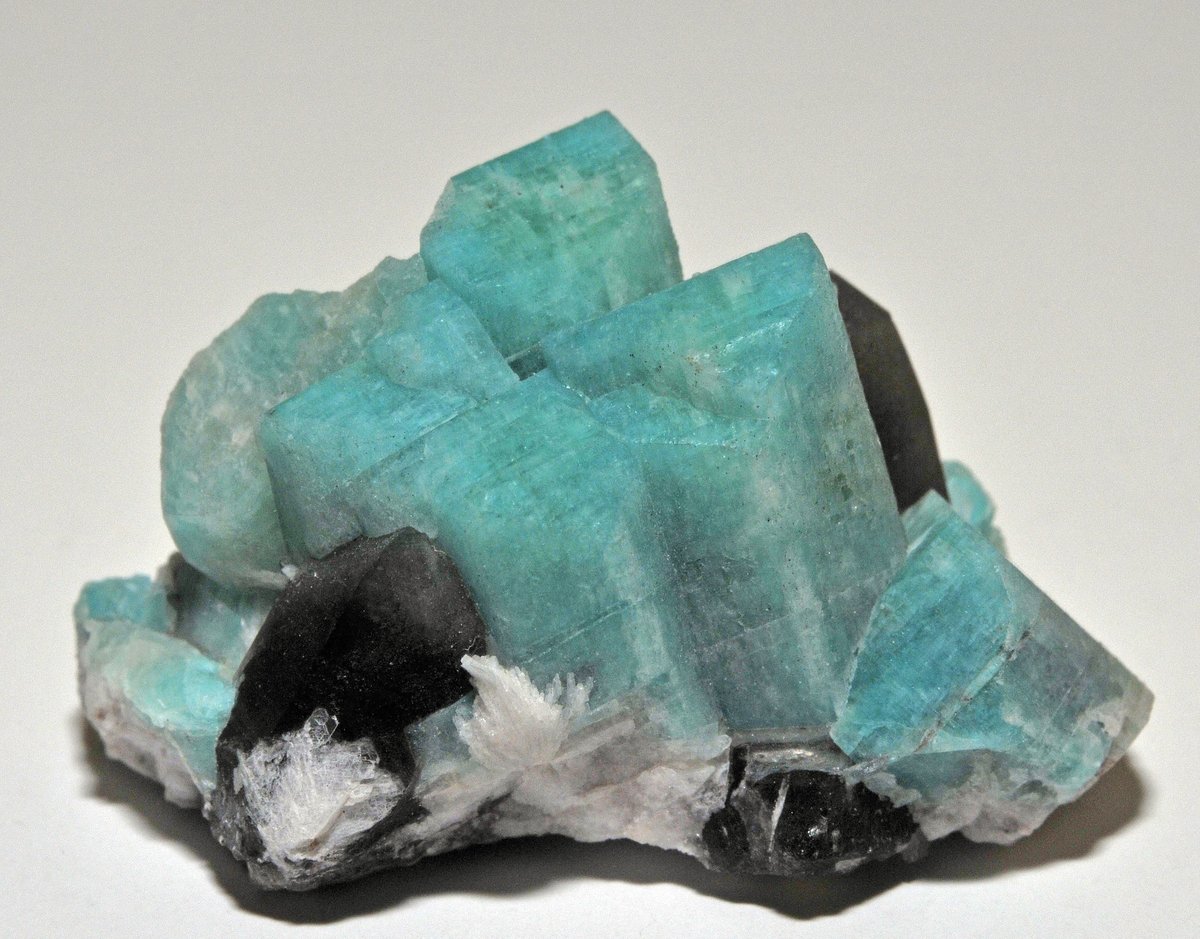
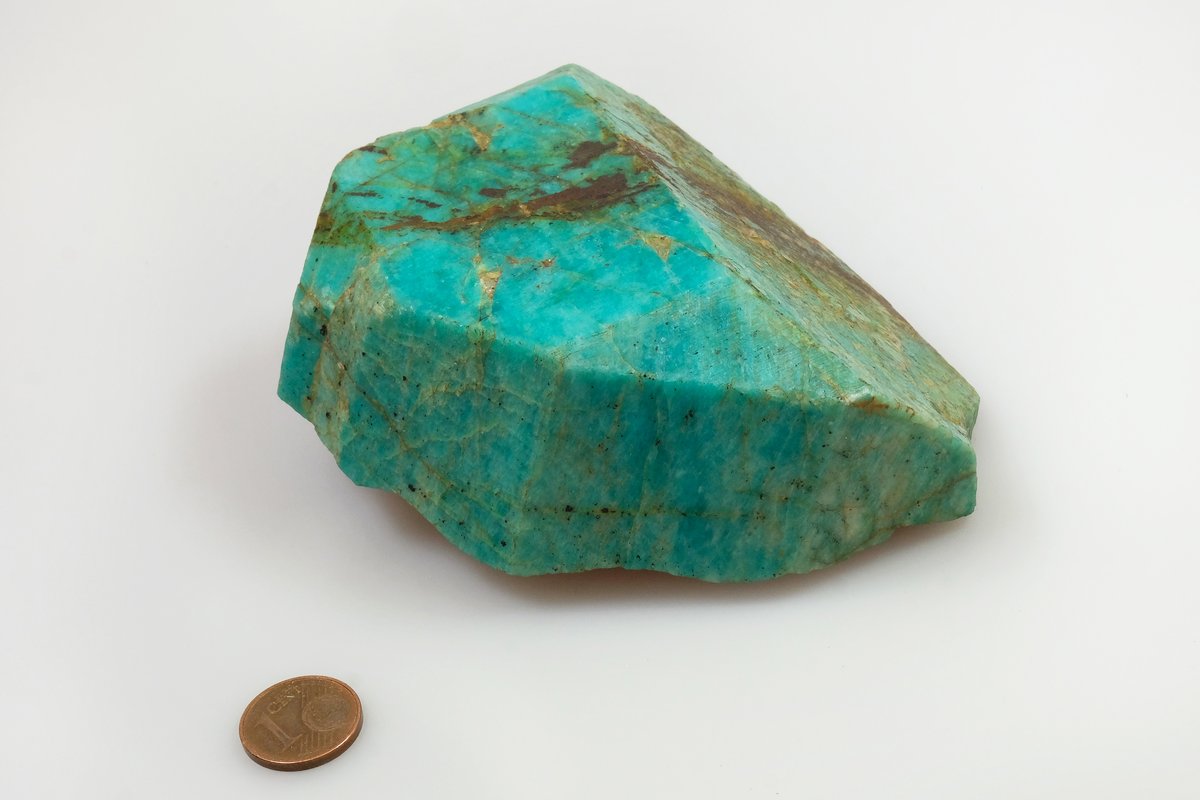
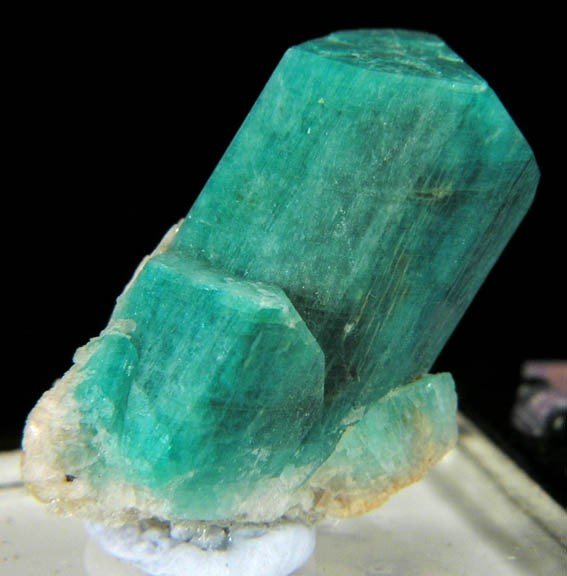
Amazonite is a blue-green variety of microcline feldspar. In the Pikes Peak granite, it forms in miarolitic cavities (pockets) inside pegmatite zones. The pockets also produce:
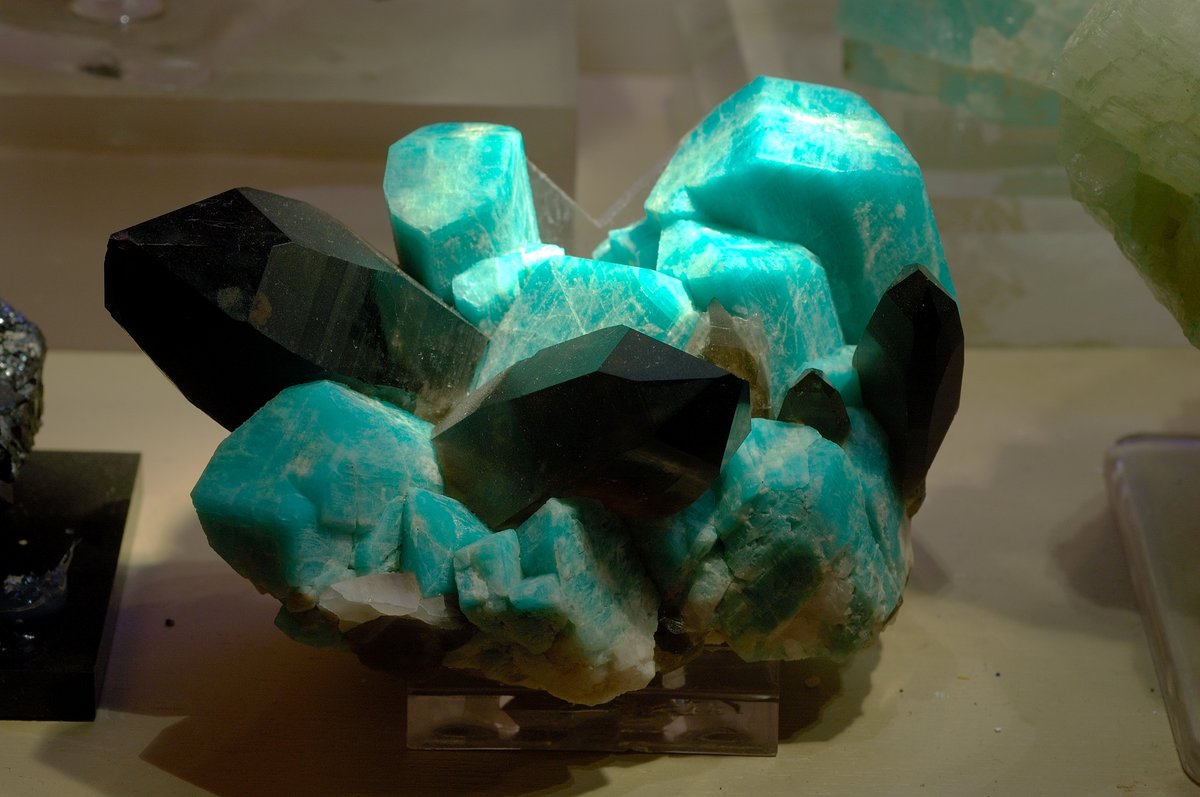
- Smoky quartz — dark brown to black, often in sharp crystals growing alongside amazonite
- Topaz — pale blue to colorless, prismatic, heavy for its size (SG ~3.5)
- Fluorite — pale purple to colorless, rare
- Microcline (non-amazonite) — white to cream feldspar, common
- Albite (cleavelandite) — white, platy
- Muscovite — silvery mica books, often lining pocket walls
The prize is a combination piece — amazonite crystals intergrown with smoky quartz, sometimes with topaz or fluorite. Those come from productive pockets on active claims, not from surface float on public ground. But you can find loose amazonite fragments, smoky quartz chips, and occasional small intact crystals in the grus on unclaimed national forest land.
Where You Can Actually Collect
Option 1: Join a club trip (the best path)
This is the honest answer. Most productive amazonite ground in the Crystal Peak district is on active mining claims owned by Joe Dorris / Pinnacle 5 Minerals or held by mineral clubs. You cannot just show up and dig.
- Lake George Gem and Mineral Club — lggmclub.org. Dues ~$25/year. Club trips go to Pinnacle 5 claims and club-held claims. We’re members and this is our top recommendation — the club runs trips to the best amazonite ground in the district, the annual gem show in August is a great event, and the community is welcoming to new collectors.
- Colorado Springs Mineralogical Society — club trips to Crystal Peak claims.
- Colorado Mineral Society, Littleton Gem and Mineral Club, Denver Gem and Mineral Guild — all run trips.
Pinnacle 5 claim visits are club-only, generally June through July, Fridays and Saturdays. The mine operator runs the dig; you help work and get to keep what you find (with the operator keeping premium combination pockets). No fee for Pinnacle 5 club visits, but you must sign a liability release.
If your group hunt is next weekend and nobody is a club member, this option won’t work on short notice. File it for next trip.
Option 2: Public surface collecting on Pike National Forest
There is unclaimed Pike National Forest ground in the area where recreational rockhounding is allowed under USFS rules. Hand tools only, personal use, small quantities, fill your holes.
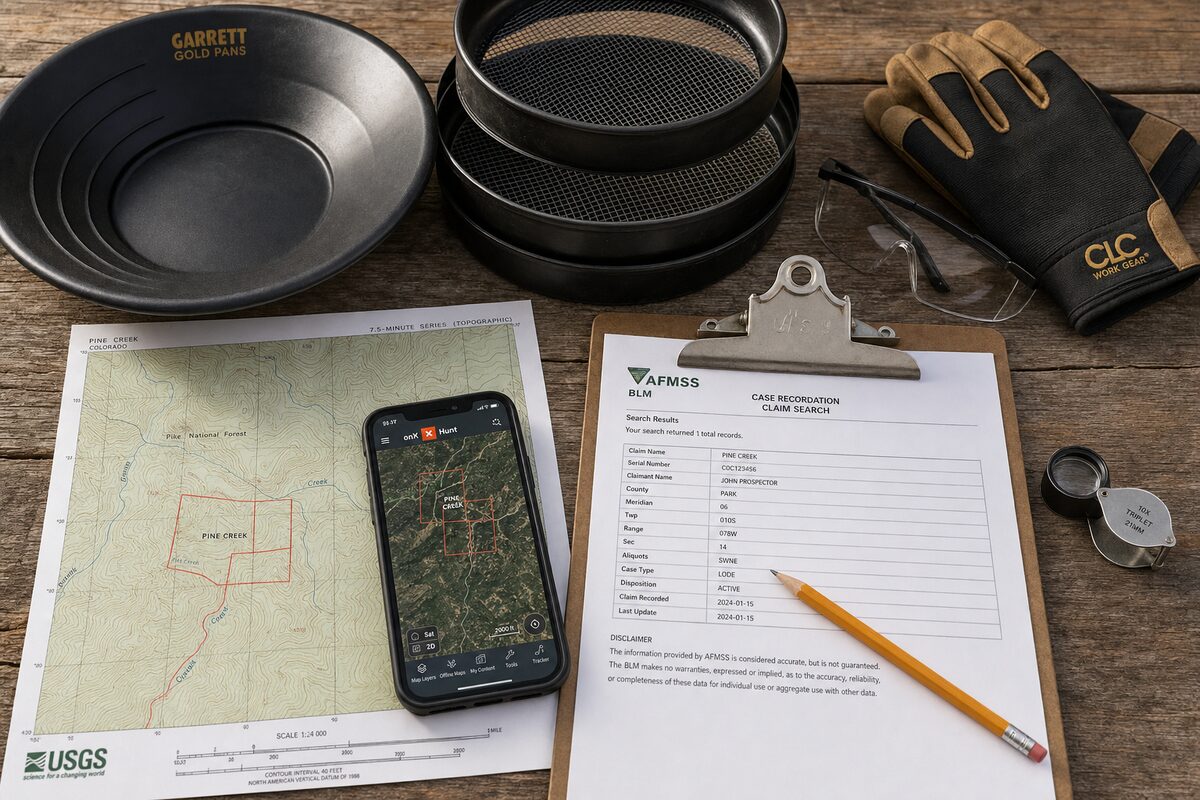
The catch: finding unclaimed ground that’s also productive requires checking BLM MLRS before you go. The claim map changes. Some areas that look like “just national forest” are under active unpatented claims.
How to check:
- Go to mlrs.blm.gov
- Search by township and range for the Lake George area (T11S R72W to T13S R73W is a starting range)
- Look for active mining claims on the parcels you plan to visit
- If a parcel has an active claim, you need the claim holder’s permission to dig — no exceptions
Call the South Park Ranger District (Pike-San Isabel National Forest, 719-836-2031) to confirm current road conditions and any area closures before you head out.
Option 3: Fee operations (check current status)
Pinnacle 5’s Topaz Mountain Gem Mine near Tarryall is a fee-dig operation for topaz-bearing gravel (roughly $50/person, you screen on-site). That’s topaz, not amazonite, but it’s in the same district and worth knowing about. Check pinnacle5minerals.com for current season status — their site has been intermittent; verify before driving out.
Independent fee-dig operations for amazonite come and go summer to summer. Check the Lake George Gem and Mineral Club newsletter for current-year listings.
What to Look For on the Ground
You’re not going to crack open a pocket on public ground with a rock hammer and pull out a museum piece. You’re going to scan weathered granite grus for float. Here’s what to look for at each stage.
Surface scanning (before you dig)
- Look for pegmatite float. Weathered-out pegmatite zones leave coarse-grained granite fragments, smoky quartz chips, and feldspar on the surface in the grus. If you see smoky quartz fragments, you’re in pegmatite country.
- Scan for color. Amazonite fragments range from pale mint to deep blue-green. Against gray-tan granite grus, even small chips stand out. Walk slowly and scan the ground in a grid pattern.
- Check root balls and overturned trees. Wind-thrown trees expose fresh grus that hasn’t been picked over. This is one of the most productive surface-collecting methods on public ground.
- Work ridge tops and outcrop margins. Pegmatite pockets weather out along the edges of granite outcrops. Look for shallow depressions in the rock surface — those are collapsed pockets.
- Don’t dig fresh rock. Surface scanning and grus screening on public land is fine. Breaking outcrop with a hammer is technically allowed with hand tools, but you’re unlikely to find anything and you’ll damage the outcrop. Save the rock-breaking for organized trips on claims where the operator wants you helping with excavation.
Screening and sorting the grus
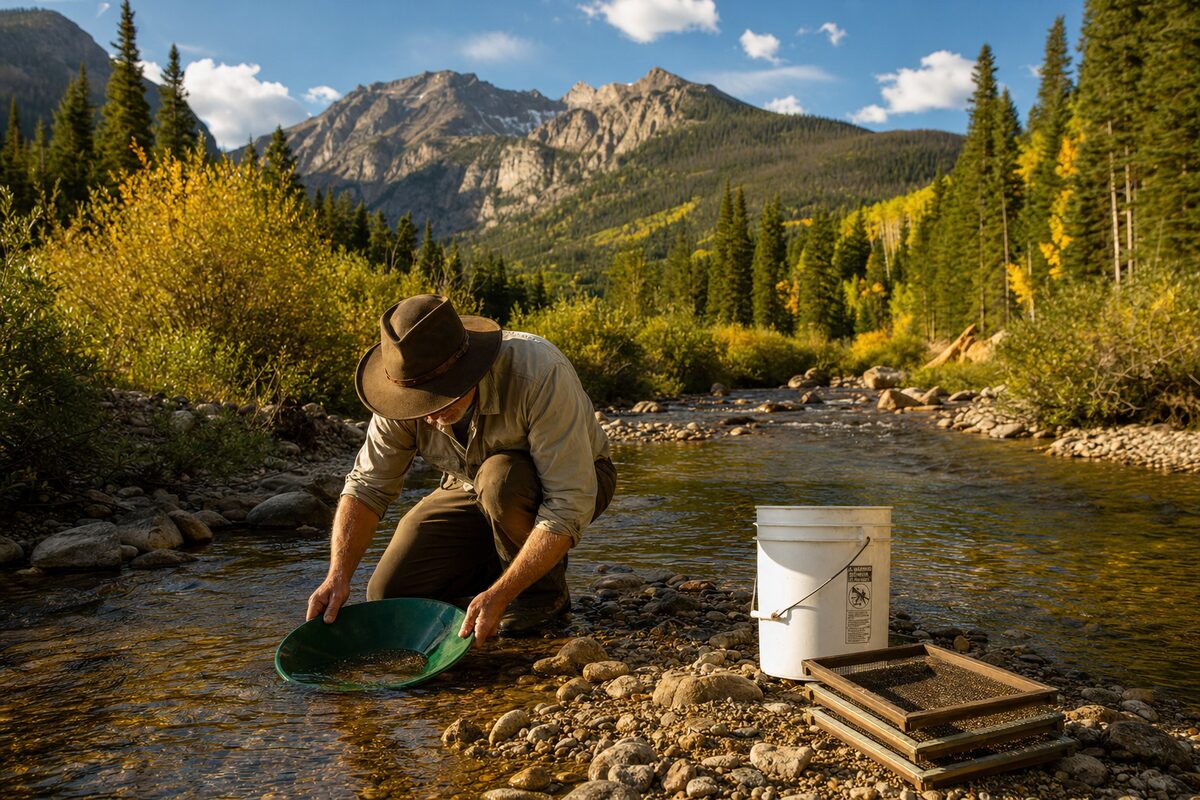
- Screen the grus. Carry a 1/4” and 1/8” classifier screen. Screen the loose decomposed granite from weathered pockets, crevices, and depressions. Heavier minerals (topaz at SG 3.5, amazonite at SG 2.6) concentrate at the bottom of the screened pile.
- Check the fines. Small amazonite chips and topaz fragments settle below the coarser quartz and feldspar. Don’t just look at what stays on top of the screen — dig through the bottom concentrate.
- Heft test. If a fragment feels disproportionately heavy for its size, it’s worth a closer look. Topaz (SG 3.5) is noticeably heavier than quartz (2.65) or feldspar (2.6).
What to Look For Once You Start Digging
If you’re on a club trip and the operator has you helping with excavation, or if you’ve found a weathered pocket on public ground and are carefully working it with hand tools, here’s what to watch for:
- Color change in the matrix. As you dig into a pegmatite zone, the granite gets coarser and you’ll start seeing larger feldspar crystals. If any of them show blue-green tint, you’re entering amazonite-bearing ground.
- Clay-filled cavities. Pockets are often filled with kaolin clay — white, sticky, and soft. If your chisel sinks into soft material instead of solid granite, stop and switch to careful picking. Clay means a pocket.
- Muscovite books. Silvery, book-like mica crystals often line pocket walls. If you start pulling out intact muscovite books, you’re at the pocket boundary.
- Cleavelandite. White, platy albite variety that forms in bladed crystals around pockets. Finding cleavelandite means you’re close.
- Smoky quartz chips. If quartz fragments get darker and more crystalline (not just milky or massive), you may be near a crystal-bearing pocket.
- Stop and assess. When you hit any of these signs, slow down. Use a dental pick or small screwdriver to carefully work around crystals, not through them. Breaking a crystal because you got excited is the most common way good specimens get ruined.
Field ID: Is It Amazonite?
| Test | Amazonite | Not Amazonite |
|---|---|---|
| Color | Uniform blue-green throughout, visible on fresh fracture | Green staining only on surface (copper mineral or lichen) |
| Hardness | 6–6.5, scratches glass | Softer = stained feldspar or other mineral |
| Cleavage | Two directions at ~90°, blocky fragments | One direction = possible topaz or quartz |
| Luster | Vitreous to dull on weathered surfaces | Waxy or chalky = weathered feldspar, not amazonite |
| Associated minerals | Smoky quartz, cleavelandite, muscovite nearby | None = probably just granite |
The most common false positive: plain microcline stained green by surface minerals. If the green color doesn’t go through the crystal on a fresh break, it’s not amazonite.
What to Bring
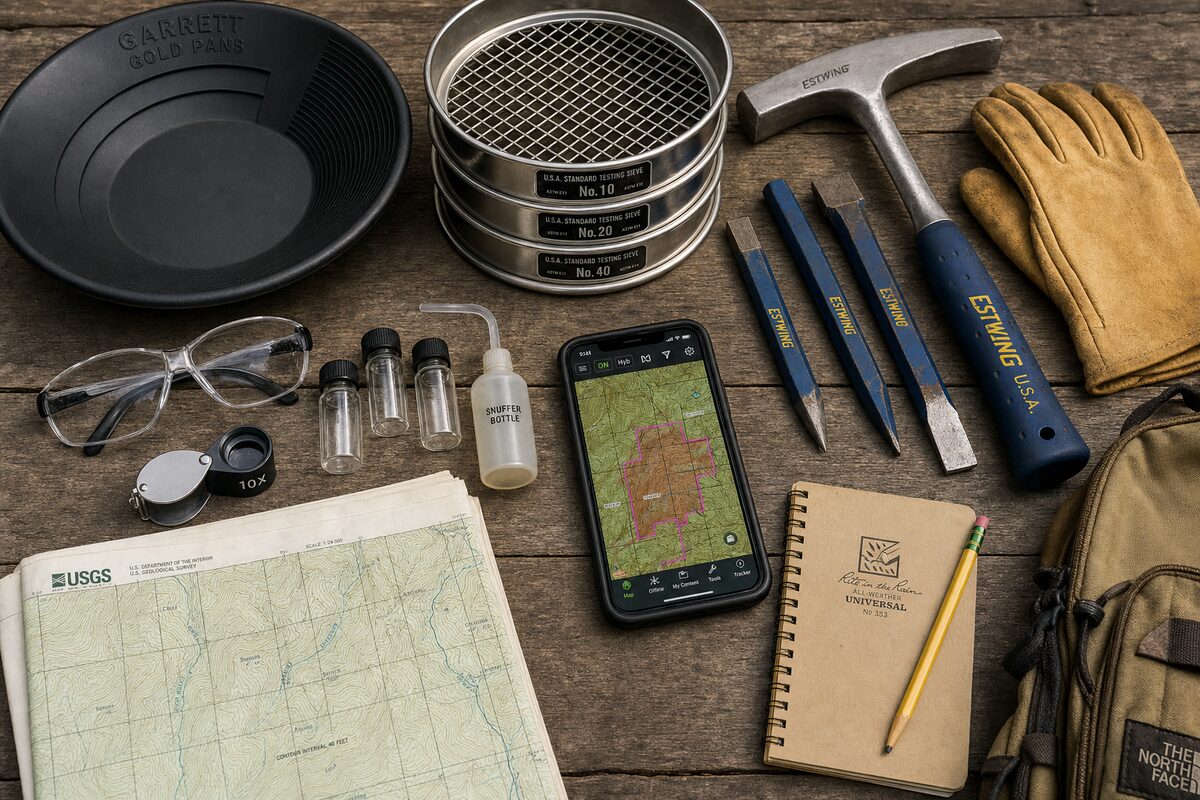
- Rock hammer (Estwing 14 or 22 oz)
- Chisels (3/8” and 1/2” cold chisels)
- Classifier screens (1/4” and 1/8” — a paint-strainer bucket from the hardware store works in a pinch)
- Bucket or day pack for specimens
- Safety glasses (mandatory for chisel work)
- Gloves (work gloves + thin nitrile for sorting)
- Specimen wrap (toilet paper, paper towels — amazonite chips against amazonite means broken edges)
- Hand lens or loupe (10x) for field ID
- GPS or phone with offline maps — cell service is spotty
- Water (1+ gallon/person)
- Sunscreen, hat, layers
- Lunch and snacks
- Rain jacket — afternoon thunderstorms are nearly guaranteed in summer
- First aid kit
Rules and Reality
- Hand tools only on USFS land. No power tools, no mechanized equipment.
- Personal use only. No commercial sale without verifying land status and following USFS commercial use rules.
- Stay off active mining claims. Check BLM MLRS before you dig. Collecting on someone’s unpatented claim without permission is trespass and mineral theft.
- Fill your holes. Leave the area like you weren’t there.
- No collecting in Florissant Fossil Beds National Monument. The monument boundaries are marked. Stay outside them.
- Be off the ridges by noon in summer. Lightning kills on exposed granite above 9,000 feet. Afternoon thunderstorms build fast July through early September.
Realistic Expectations
If you’re surface collecting on unclaimed public ground near Lake George, expect to find:
- Small amazonite fragments and chips (1/4” to 1” pieces)
- Smoky quartz crystal fragments
- Granite grus and feldspar (lots of it)
- Maybe one or two intact small crystals if you’re patient and lucky
You will not find a pocket-grade amazonite-smoky quartz combination specimen on a weekend surface hunt on public ground. Those come from active claims with professional excavation. What you’ll find is enough to confirm you’re in the right geology, learn the field ID, and decide if you want to come back with a club trip.
That’s still a good day.
Going Next Weekend? Do This Now
- Check BLM MLRS for the areas you plan to visit. Print or screenshot the claim map.
- Call the South Park Ranger District (719-836-2031) for road conditions and closures.
- Check the weather — if it’s monsoon season, plan to be off the ridges by noon.
- Pack the gear list above the night before.
- Fill up in Lake George — gas, food, water. Services are limited south of Florissant.
- Read the full Crystal Peak field trip guide for the detailed access breakdown and claim information.
Have fun, stay legal, and wrap your finds.
Questions about Lake George collecting? Contact us or check our Mining Guide for claim research tools.