Colorado Casual Use Prospecting Checklist: How to Pan and Sample Legally (and Avoid Working an Active Claim)
You want to pan a creek in Colorado this weekend. You don’t have a claim, you don’t want a claim, and you don’t want to file paperwork. You just want to spend a Saturday panning gravel and going home with a vial of color.
Good news: federal law allows this. It’s called Casual Use, and it’s the legal category that covers 95% of recreational prospectors in Colorado. Bad news: most people who do it don’t actually understand where the lines are, and that’s how citations, confiscations, and civil claim-holder complaints happen.
This is the practical checklist. Read it once, save the link, and reference it before every trip.
What “Casual Use” Actually Means
Casual Use is a specific regulatory category defined at 43 CFR 3809.5 (for BLM land) and 36 CFR 228.4 (for National Forest land). The definitions overlap but aren’t identical, and Colorado has ground administered by both agencies plus state land, county land, and private inholdings scattered through the whole picture.
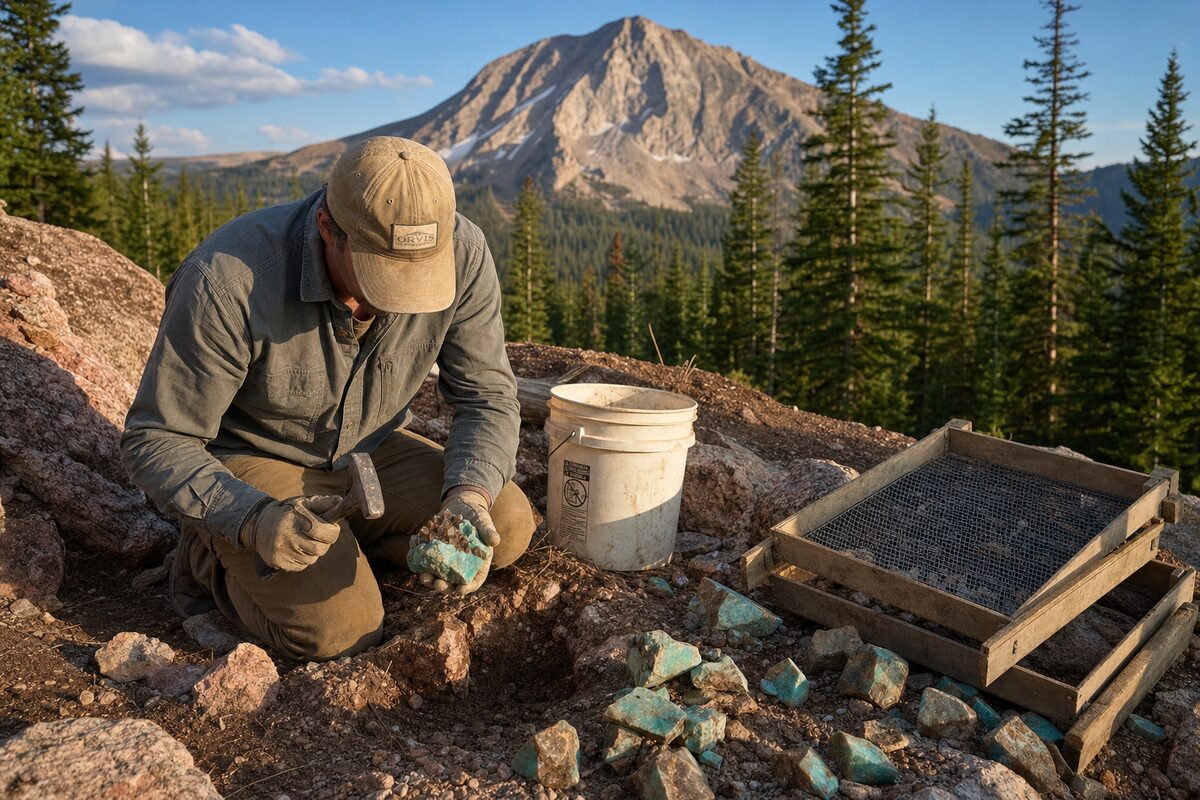
The core BLM definition (43 CFR 3809.5): Casual Use means “activities ordinarily resulting in no or negligible disturbance of the public lands or resources.” It specifically includes “collecting of mineral specimens using hand tools” and “hand-panning.”
The Forest Service definition (36 CFR 228.4(a)) is similar but adds a helpful list of examples of things that DON’T need any Forest Service notification: “gold panning, mineral collecting, and non-motorized hand sluicing” that “will not cause significant surface resource disturbance and will not involve removal of more than a reasonable amount of mineral deposit for analysis and study.”
Practically, on either agency’s ground, Casual Use means:
- Hand tools only
- Personal, non-commercial use
- No significant surface disturbance
- No motorized or mechanized equipment
- Reasonable quantities (typically capped at 25 lbs per year of specimens, though not always spelled out)
- No selling what you collected
If you cross any of those lines, you’re no longer operating under Casual Use and you need a Notice of Intent or Plan of Operations. Our Mining Claims 101 post breaks down those higher tiers in detail.
The Pre-Trip Checklist
Before you leave home, run through these seven items.
1. Verify Land Ownership
Every parcel in Colorado is one of: BLM, USFS, National Park Service (NPS), state land, county land, tribal land, or private. Rules differ dramatically by category.
- BLM ground: Casual Use allowed on unclaimed parcels
- USFS ground: Casual Use allowed on unclaimed parcels
- NPS ground (National Parks, Monuments, Preserves): No collecting, period
- State land (Colorado State Land Board, State Parks, DPW areas): Almost always prohibited; verify with the specific unit
- County/municipal: Varies. Some (like Fairplay) have organized programs. Most prohibit collecting.
- Tribal: Prohibited without tribal permit
- Private: Prohibited without written landowner permission
Verify with onX Hunt (or Backcountry/Offroad Elite tier). Toggle the Government Lands and Private Lands layers. If you can’t identify the managing agency, don’t dig.
2. Check for Active Mining Claims
This is the step most beginners skip. onX shows property boundaries but not federal mining claims. A parcel of BLM ground can look wide-open on onX while sitting entirely under an active claim.
Two tools to check:
- MyLandMatters.org — Free web tool. Click Maps → Mining Claims → Colorado. Zoom to your target. Active claims show as colored polygons.
- BLM LR2000 — Official BLM database. Search by state, county, or geographic coordinates. Returns claim serial numbers, holder names, and legal descriptions.
If you find an active claim covering your target area: it’s off-limits without written permission from the claim holder. No exceptions.
3. Check Current Agency Alerts
Both the BLM Colorado state office and the various National Forests publish current alerts and closure orders. Recent examples:
- The Pike-San Isabel National Forest South Park Ranger District has an active closure on Eagle Rock and Observatory Rock areas, January 1 through July 31 annually, 2026 through 2031.
- The Uncompahgre National Forest Ouray Ranger District has active safety closures around the Governor Basin Mine cleanup area.
Check before every trip:
- PSICC alerts
- BLM Colorado field office pages
- Individual National Forest alert pages for your area
4. Understand Local Rules Beyond Casual Use
Some spots have specific rules that go beyond the federal baseline:
- National Forest lands prohibit high-banking entirely — this is stricter than BLM
- PSICC dredge rules: Suction dredges 2” and smaller require a Notice of Intent; larger requires a Plan of Operations
- State-designated collecting areas (rare in Colorado) may have their own permits
- Wilderness Areas: No collecting, no mechanized equipment, hand tools only if allowed at all
Call the local ranger district if there’s any doubt. Colorado ranger district numbers:
- South Park (PSICC): 719-836-2031
- Salida (PSICC): 719-539-3591
- Ouray (Uncompahgre NF): 970-240-5300
- Idaho Springs (Arapaho NF): 303-567-3000
5. Confirm Season and Weather
Colorado prospecting is highly seasonal.
- High country (above 9,500 ft): June 15 through October 15 realistically
- Front Range foothills (below 9,000 ft): April through November
- Anywhere: Afternoon thunderstorms are near-daily in July and August. Start early, get off exposed ground by noon
- Snow closures: Many high-country roads close November through May. Verify with USFS or CDOT before driving
6. Pack the Right Gear
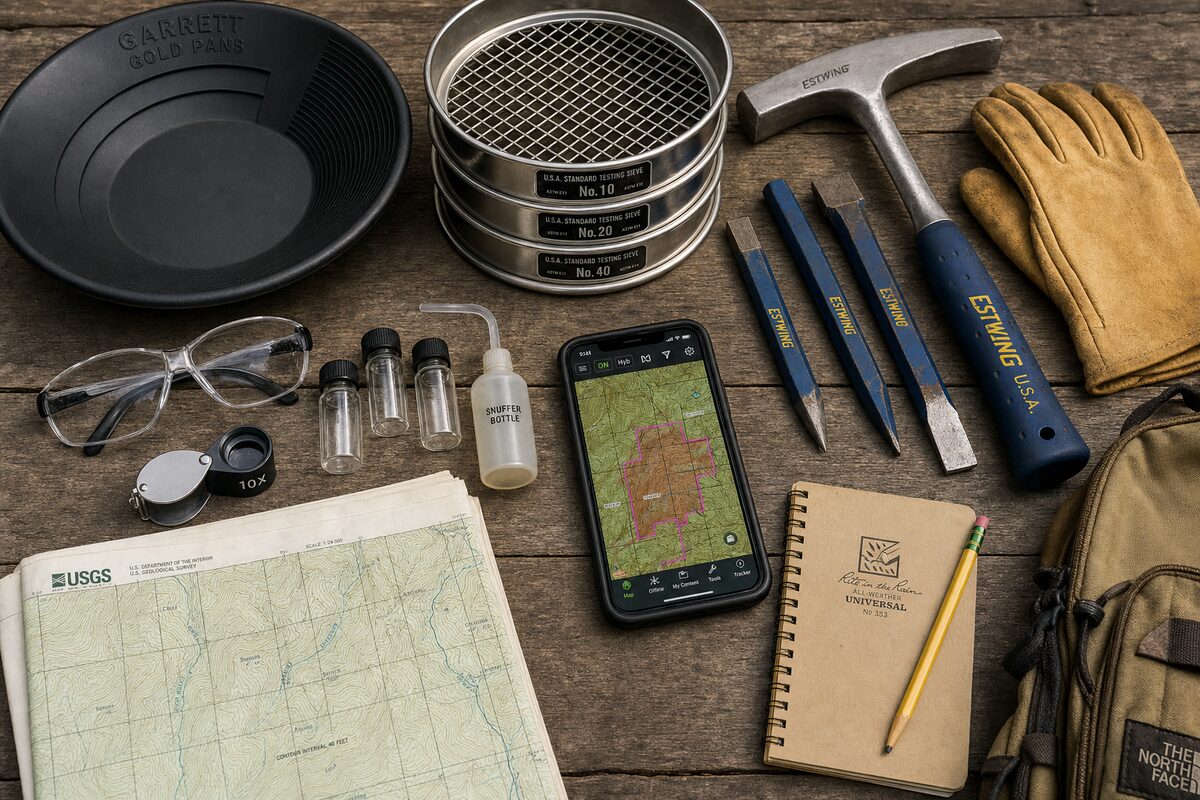
Casual Use limits the gear you can bring. Legal hand tools include:
- Gold pan
- Classifier screens
- Snuffer bottle
- Shovel (reasonable size)
- Rock hammer
- Cold chisels
- Hand pick
- Hand sluice (not motorized, not high-banker)
Things that push you OUT of Casual Use:
- Any motorized equipment (generators, pumps, motors, compressors)
- High-bankers (illegal on all National Forest land, need permit on BLM)
- Suction dredges (require NOI or Plan of Operations)
- Rock drills or explosives (Plan of Operations territory)
- Anything you’d need a truck to unload
If it doesn’t fit in a backpack, you probably need a permit.
7. Bring the Documentation
If a ranger, BLM enforcement officer, or claim holder asks what you’re doing, having the right answers on hand keeps things smooth.
- Print or screenshot your onX and MyLandMatters verification showing the parcel is unclaimed and USFS/BLM
- Save the BLM LR2000 search result showing no active claim
- Know the section/township/range you’re on
- Have your ID and vehicle registration accessible
You are not required to justify Casual Use activity, but demonstrating that you did your homework tends to end conversations quickly.
The On-Site Rules
Once you’re on the ground, five rules cover almost everything:
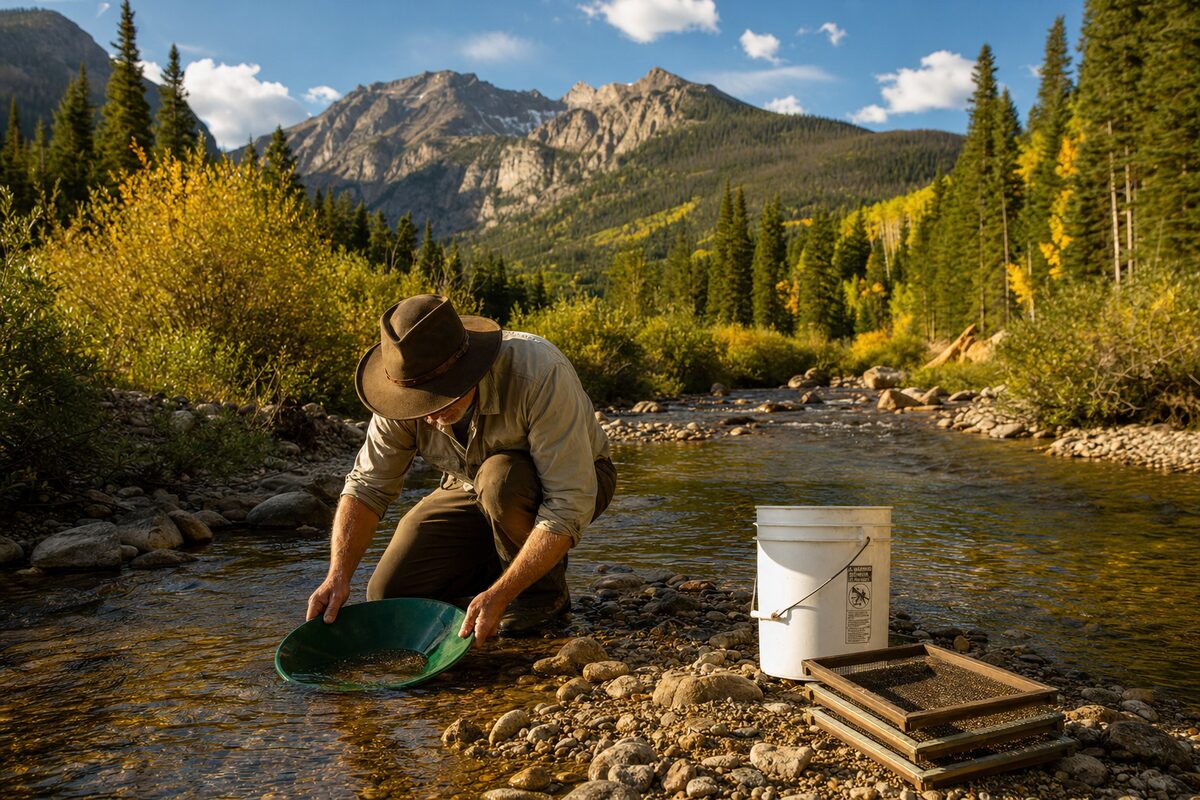
1. Below the high-water mark. On flowing water, Casual Use applies to the streambed itself and the wetted perimeter. Working above the high-water mark involves surface disturbance of upland ground and pushes you into permit territory.
2. No caving banks, no undermining vegetation. Digging out streambanks or exposing tree roots crosses into “significant surface resource disturbance.” Stay in the gravel below the water line.
3. Fill your holes. Every hole. Every trip. Non-negotiable. This is the single most common Casual Use violation and the easiest one to avoid.
4. Pack out everything. Every candy wrapper, water bottle, and cigarette butt. Ideally, more than you brought in. Litter on public lands is what triggers most permanent collecting closures.
5. Stop if you hit historic material. Old cabin ruins, historic mine timbers, tools, coins, artifacts of any kind — leave them. Historic material on federal land is protected by the Archaeological Resources Protection Act and the Antiquities Act. Photograph, don’t touch, and report to the managing agency if the site looks significant.
What NOT to Do
A short list of the things that will get you in serious trouble:
- Dig on an active claim without written permission. Guaranteed citation. Possible civil suit from the claim holder.
- Sell what you collected under Casual Use. Casual Use is explicitly for personal use only. Selling makes it commercial, which requires operating under a proper claim and paying royalties.
- Bring motorized equipment. Even a small pump. If you have a generator, you’re outside Casual Use.
- Cross onto private inholdings. National Forest boundaries have many private parcels tucked inside. onX shows them.
- Enter abandoned mines. Not a Casual Use rule but a safety rule. Bad air, rotten timbers, undetonated blasting caps. Never worth it.
- Ignore signs. Posted claim boundaries, closure orders, or restricted-area signs are legally binding. Believing they don’t apply to you is how citations happen.
Realistic Expectations
Casual Use collecting in Colorado in 2026 is a fundamentally different activity than it was in 1926, 1966, or even 1996. Most of the productive ground is claimed. What’s left is picked-over.
That’s not a reason not to do it. It’s a reason to set the right expectations:
- Test pans first. Two or three consecutive empty pans means move.
- Weight quality over quantity. A few small pieces of well-preserved material from a good session beats a bucket of chips.
- Learn to read water. Inside bends, boulder shadows, bedrock cracks. Same physics that concentrated the gold 100 million years ago still applies.
- Buy specimens too. Combining field collecting with careful buying from reputable dealers is how serious collectors build a collection. There’s no shame in it.
Where To Actually Go
For specific Colorado Casual Use targets we’ve covered in detail:
- Fairplay Middle Fork Gold Panning Park — town-run permit system, guaranteed legal
- Jefferson Area (Park County) — Michigan Creek and Jefferson Creek drainages, heavily claimed but with USFS access
- Pikes Peak Pegmatites — mostly claimed, club membership required for productive ground
- Park County Minerals overview — Lake George area geology and access
For the fundamentals of clubs, tools, and apps, our Hobby Mining Getting Started post is the starting point. The full Mining Guide covers everything from history to legal framework in one place.
Questions about Casual Use limits or planning a specific trip? Get in touch.